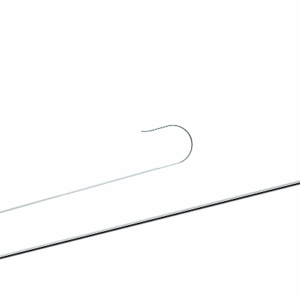



SafeSept® Transseptal Guidewire
Transseptal Access System
Specially designed to improve safety and lessen penetration forces when crossing the interatrial septum at the fossa ovalis while supported by a transseptal introducer.
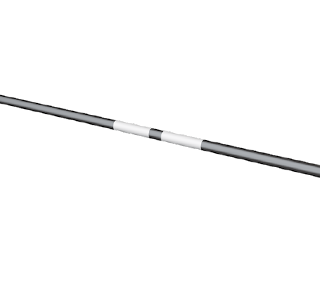
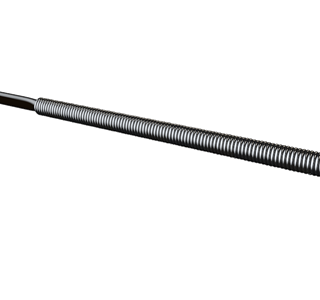
- Radiopaque coil makes the wire easily visible fluoroscopically
- Specially designed tip configuration requires less force than a standard transseptal needle, enabling effortless penetration of the fossa
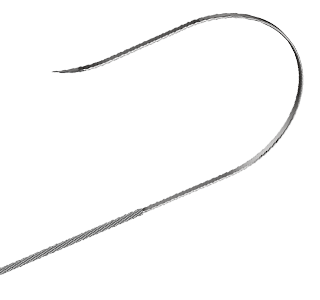
- ‘J’ shape allows safe advancement to assure proper wire location within left atrium
- Transseptal needle and dilator are rendered atraumatic when tracking over the SafeSept®
- Proximal marker bands help determine SafeSept® tip location relative to trans-septal needle tip during the procedure
- 135cm or 140cm length for compatibility with all currently available adult transseptal introducer systems
Product Description
The very sharp tip of the SafeSept® Transseptal Guidewire requires less force than a conventional transseptal needle to cross the interatrial septum, making access easier, especially in difficult or previously failed cases, improving the safety of whatever introducer system you are currently using.
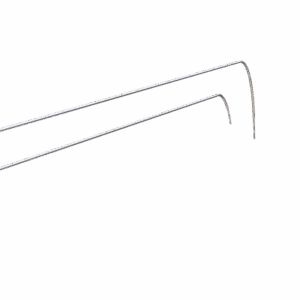
The SafeSept® is the first significant advance in left atrial access since the Brockenbrough needle. Specifically designed to cross the interatrial septum at the fossa ovalis when supported by a transseptal introducer, SafeSept® is a 135cm long, 0.014 inch diameter nitinol guidewire specifically designed for transseptal puncture. After the transseptal dilator has “tented” the fossa ovalis, effortless advancement of the SafeSept® tip perforates the membranous fossa, requiring less force than a standard transseptal needle. Unsupported by the needle and dilator, the tip of the wire assumes a ‘J’ shape, rendering it incapable of further tissue penetration.
A radiopaque coil along the shaft allows for fluoroscopic visualization of the wire within the left atrium while proximal marker bands help determine the approximate location of the SafeSept® tip in relation to the tip of the needle. The transseptal needle, dilator and sheath are then advanced “over the wire” into the left atrium with virtually no possibility of aortic or pericardial perforation.
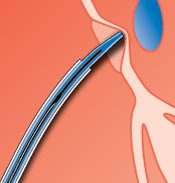
Tenting the Interatrial Septum

Advancing SafeSept® into the Left Atrium
 Needle, Dilator and Introducer Tracking over SafeSept®
SafeSept is a registered trademark of Pressure Products Medical Supplies, Inc. Patents 9,821,145; 8,992,556; 8,500,697; 8,292,910; 8,157,829; EP1542593; EP1542593; JP4496223. Other U.S. and worldwide patents pending.
Safesept® Transseptal Guidewire
| SS-135 | 135 cm | 0.014" |
| SS-140 | 140 cm | 0.018" |
Each SafeSept® Transseptal Guidewire kit includes:
- One transseptal guidewire.
- One tip straightener.
- Five (5) kits per box.
Downloads
View
Video DemonstrationPublication Downloads
- Asmundis C, Chierchia GB, Sarkozy A, et al. “Novel trans-septal approach using a Safe Sept J-shaped guidewire in difficult left atrial access during atrial fibrillation ablation,” Europace (2009) 11 (5):657-659.
- Laish-Farkash A, Katz A, Fishman E, et al. “Clinical Experience with Routine Use of SafeSept J-Shaped Guidewire for Transseptal Puncture.” Barzilai Medical Center, Ashkelon, Israel, Cardiology Department, Electrophysiology Unit, Faculty of Health Sciences, Ben Gurion University, Ashkelon, Israel.
- Wadehra V, Buxton AE, Antoniadis AP, et al. “The use of a novel nitinol guidewire to facilitate transseptal puncture and left atrial catheterization for catheter ablation procedures,” Europace (2011) 13 (10):1401-1405.
- De Ponti R. “Transseptal catheterization for ablation in the left heart: what to do when the door is locked up tight?” Europace (2010) 12 (5):604-605
- Wieczorek M, Hoeltgen R, Akin E, et al. “Use of a novel needle wire in patients undergoing transseptal puncture associated with severe septal tenting,” J Interv Card Electrophysiol (2010) Jan; 27(1):9-13.
- Zucchetti, M., Casella, M., Dello Russo, A et al. “Difficult case of a trans-septal puncture: Use of a “SafeSept” guidewire,” World J Cardiol (2015) April; 7(8):499-503.
- Deisenhofer I, Abdelhamid M, Adamo M, et al. “Transseptal puncture in cardiovascular interventions: a clinical consensus statement of the European Heart Rhythm Association, the Heart Failure Association, the European Association of Percutaneous Cardiovascular Interventions, the European Association of Cardiovascular Imaging of the ESC, and the Association for European Paediatric and Congenital Cardiology,” EP Europace (2026) May; 28(5):1-25.